110 Experiencing Multimedia
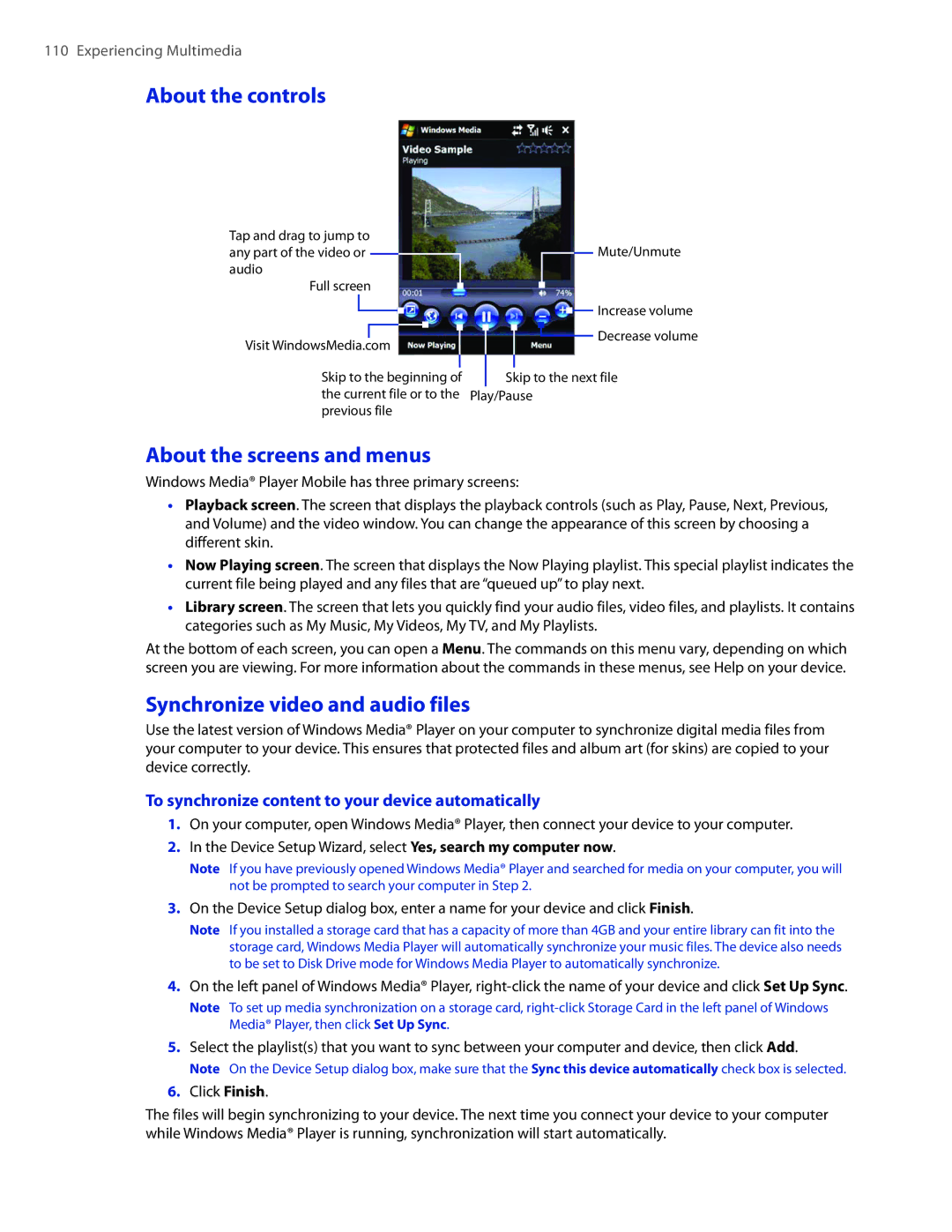
About the controls
Tap and drag to jump to
any part of the video or  audio
Full screen
Visit WindowsMedia.com
Skip to the beginning of the current file or to the previous file
Mute/Unmute

 Increase volume
 Decrease volume
Skip to the next file
Play/Pause
About the screens and menus
Windows Media® Player Mobile has three primary screens:
•Playback screen. The screen that displays the playback controls (such as Play, Pause, Next, Previous, and Volume) and the video window. You can change the appearance of this screen by choosing a different skin.
•Now Playing screen. The screen that displays the Now Playing playlist. This special playlist indicates the current file being played and any files that are “queued up” to play next.
•Library screen. The screen that lets you quickly find your audio files, video files, and playlists. It contains categories such as My Music, My Videos, My TV, and My Playlists.
At the bottom of each screen, you can open a Menu. The commands on this menu vary, depending on which screen you are viewing. For more information about the commands in these menus, see Help on your device.
Synchronize video and audio files
Use the latest version of Windows Media® Player on your computer to synchronize digital media files from your computer to your device. This ensures that protected files and album art (for skins) are copied to your device correctly.
To synchronize content to your device automatically
1.On your computer, open Windows Media® Player, then connect your device to your computer.
2.In the Device Setup Wizard, select Yes, search my computer now.
Note If you have previously opened Windows Media® Player and searched for media on your computer, you will not be prompted to search your computer in Step 2.
3.On the Device Setup dialog box, enter a name for your device and click Finish.
Note If you installed a storage card that has a capacity of more than 4GB and your entire library can fit into the storage card, Windows Media Player will automatically synchronize your music files. The device also needs to be set to Disk Drive mode for Windows Media Player to automatically synchronize.
4.On the left panel of Windows Media® Player,
Note To set up media synchronization on a storage card,
5.Select the playlist(s) that you want to sync between your computer and device, then click Add.
Note On the Device Setup dialog box, make sure that the Sync this device automatically check box is selected.
6.Click Finish.
The files will begin synchronizing to your device. The next time you connect your device to your computer while Windows Media® Player is running, synchronization will start automatically.