AMD Athlon™ Processor x86 Code Optimization | 22007E/0 — November 1999 |
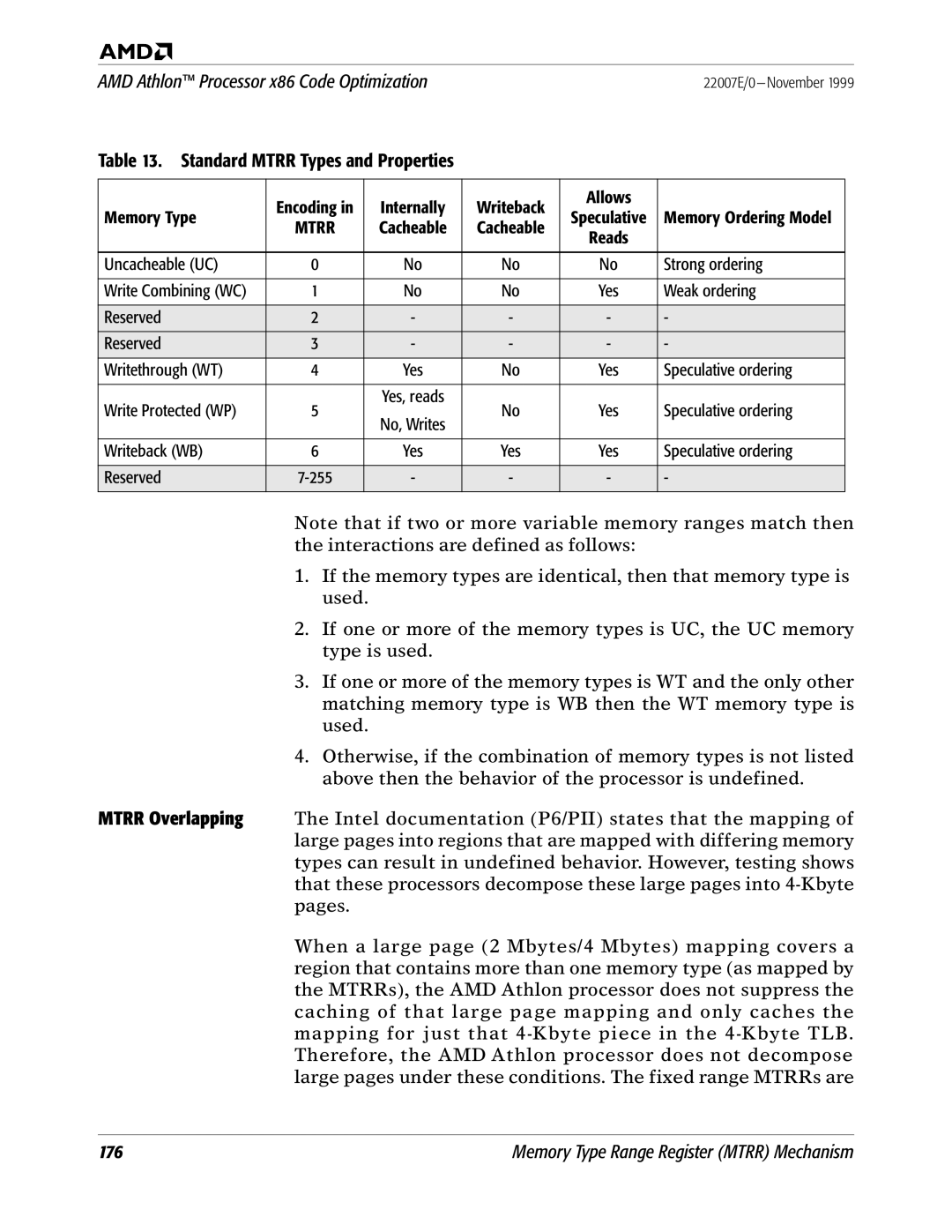
Table 13. Standard MTRR Types and Properties
| Encoding in | Internally | Writeback | Allows |
| |
Memory Type | Speculative | Memory Ordering Model | ||||
MTRR | Cacheable | Cacheable | ||||
| Reads |
| ||||
|
|
|
|
| ||
|
|
|
|
|
| |
Uncacheable (UC) | 0 | No | No | No | Strong ordering | |
|
|
|
|
|
| |
Write Combining (WC) | 1 | No | No | Yes | Weak ordering | |
|
|
|
|
|
| |
Reserved | 2 | - | - | - | - | |
Reserved | 3 | - | - | - | - | |
Writethrough (WT) | 4 | Yes | No | Yes | Speculative ordering | |
|
|
|
|
|
| |
Write Protected (WP) | 5 | Yes, reads | No | Yes | Speculative ordering | |
No, Writes | ||||||
|
|
|
|
| ||
|
|
|
|
|
| |
Writeback (WB) | 6 | Yes | Yes | Yes | Speculative ordering | |
|
|
|
|
|
| |
Reserved | - | - | - | - | ||
|
|
|
|
|
|
Note that if two or more variable memory ranges match then the interactions are defined as follows:
1.If the memory types are identical, then that memory type is used.
2.If one or more of the memory types is UC, the UC memory type is used.
3.If one or more of the memory types is WT and the only other matching memory type is WB then the WT memory type is used.
4.Otherwise, if the combination of memory types is not listed above then the behavior of the processor is undefined.
MTRR Overlapping The Intel documentation (P6/PII) states that the mapping of large pages into regions that are mapped with differing memory types can result in undefined behavior. However, testing shows that these processors decompose these large pages into
When a large page (2 Mbytes/4 Mbytes) mapping covers a region that contains more than one memory type (as mapped by the MTRRs), the AMD Athlon processor does not suppress the caching of that large page mapping and only caches the mapping for just that
176 | Memory Type Range Register (MTRR) Mechanism |