Using the overlap_rcv feature of L4L3mENABLE_PROTOCOL
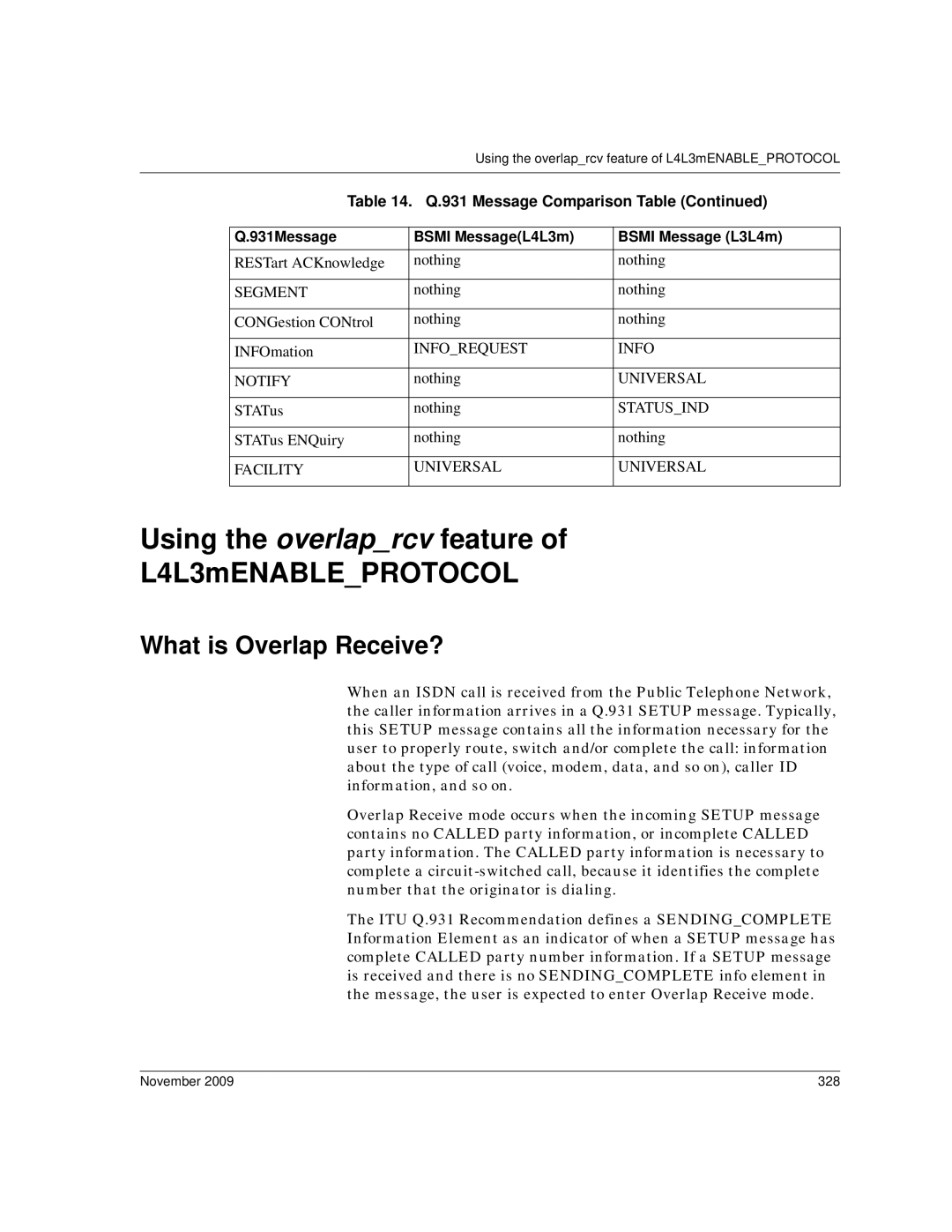
Table 14. Q.931 Message Comparison Table (Continued)
Q.931Message | BSMI Message(L4L3m) | BSMI Message (L3L4m) |
RESTart ACKnowledge | nothing | nothing |
|
|
|
SEGMENT | nothing | nothing |
|
|
|
CONGestion CONtrol | nothing | nothing |
|
|
|
INFOmation | INFO_REQUEST | INFO |
|
|
|
NOTIFY | nothing | UNIVERSAL |
|
|
|
STATus | nothing | STATUS_IND |
|
|
|
STATus ENQuiry | nothing | nothing |
|
|
|
FACILITY | UNIVERSAL | UNIVERSAL |
|
|
|
Using the overlap_rcv feature of
L4L3mENABLE_PROTOCOL
What is Overlap Receive?
When an ISDN call is received from the Public Telephone Network, the caller information arrives in a Q.931 SETUP message. Typically, this SETUP message contains all the information necessary for the user to properly route, switch and/or complete the call: information about the type of call (voice, modem, data, and so on), caller ID information, and so on.
Overlap Receive mode occurs when the incoming SETUP message contains no CALLED party information, or incomplete CALLED party information. The CALLED party information is necessary to complete a
The ITU Q.931 Recommendation defines a SENDING_COMPLETE Information Element as an indicator of when a SETUP message has complete CALLED party number information. If a SETUP message is received and there is no SENDING_COMPLETE info element in the message, the user is expected to enter Overlap Receive mode.
November 2009 | 328 |