C H A P T E R 3 | Intel® NetStructure™ 7190 |
7190 (Primary)
host name:
IP address: 10.54.67.2
7xxx Load Balancer
IP address 10.54.67.4
name: lb1
service VIP 10.54.67.5 port 80 service VIP 10.54.67.6 port 80
generic load balancer
IP address 10.54.67.3
name: isvg1
service VIP 10.54.67.7 port 255 service VIP 10.54.67.8 port 255
Data Center 1
Netw ork Topology M ap of
ww w .xyz-ex.com Data Center 2
generic load balancer | ||
IP address 10.100.68.3 | ||
name: isvg2 |
|
|
service VIP 10.54.68.7 | port | 255 |
service VIP 10.54.68.8 | port 255 | |
7xxx Load Balancer |
| |
IP address 10.100.68.4 |
| |
name: lb2 |
|
|
service VIP 10.100.68.5 | port | 80 |
service VIP 10.100.68.6 | port | 80 |
7190 (Secondary & Peer) | ||
host name: |
| |
IP address: 10.100.68.2 |
|
|
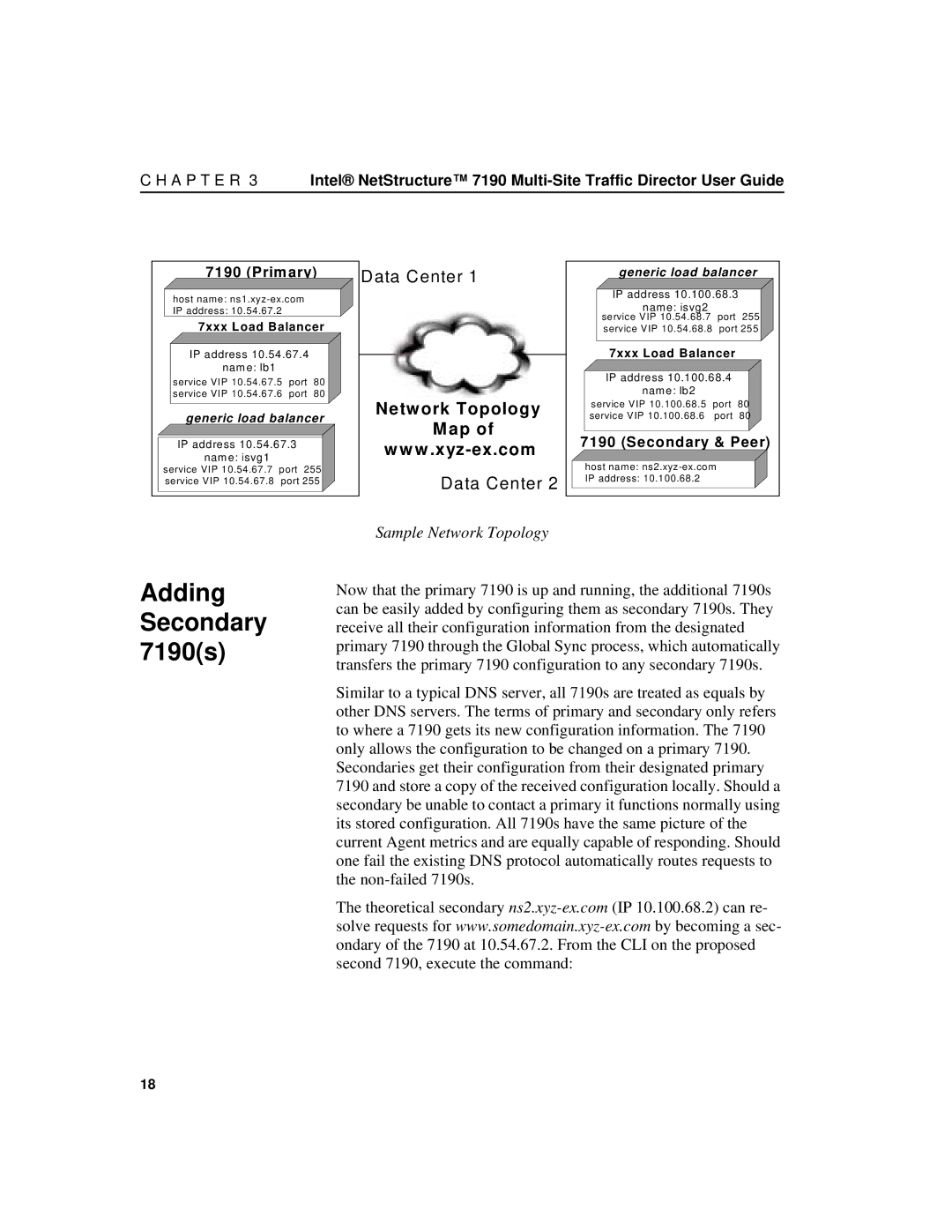
Sample Network Topology
Adding Secondary 7190(s)
Now that the primary 7190 is up and running, the additional 7190s can be easily added by configuring them as secondary 7190s. They receive all their configuration information from the designated primary 7190 through the Global Sync process, which automatically transfers the primary 7190 configuration to any secondary 7190s.
Similar to a typical DNS server, all 7190s are treated as equals by other DNS servers. The terms of primary and secondary only refers to where a 7190 gets its new configuration information. The 7190 only allows the configuration to be changed on a primary 7190. Secondaries get their configuration from their designated primary 7190 and store a copy of the received configuration locally. Should a secondary be unable to contact a primary it functions normally using its stored configuration. All 7190s have the same picture of the current Agent metrics and are equally capable of responding. Should one fail the existing DNS protocol automatically routes requests to the
The theoretical secondary
18