80386
31302928272625242322212019181716151413121110987654321 0
311 1 1 1 0 1 1 0 o 0 0 0 1 1 1 1 0 1 0 0 1 1 0 0 o 0 0 0 0 0 1 1
630 0 1 0 0 0 1 1 1 1 0 0 1 0 1 0 1 1 1 1 1 1 0 0 1 1 1 1 1 o 0 1
951 1 1 1 1 1 1 1 1 1 1 1 1 1 1 1 1 1 1 1 1 1 1 1 1 1 1 1 1 1 1 1
1270 0 0 0 0 0 0 000 o 0 0 0 0 o 0 0 0 0 0 0 0 0 0 0 0 0 0 o 0 0 1 1 1 1 1 1 1 1
'l' | etc. |
|
| 'l' |
1/0 Ports Accessible: 2 | 127 | |||
|
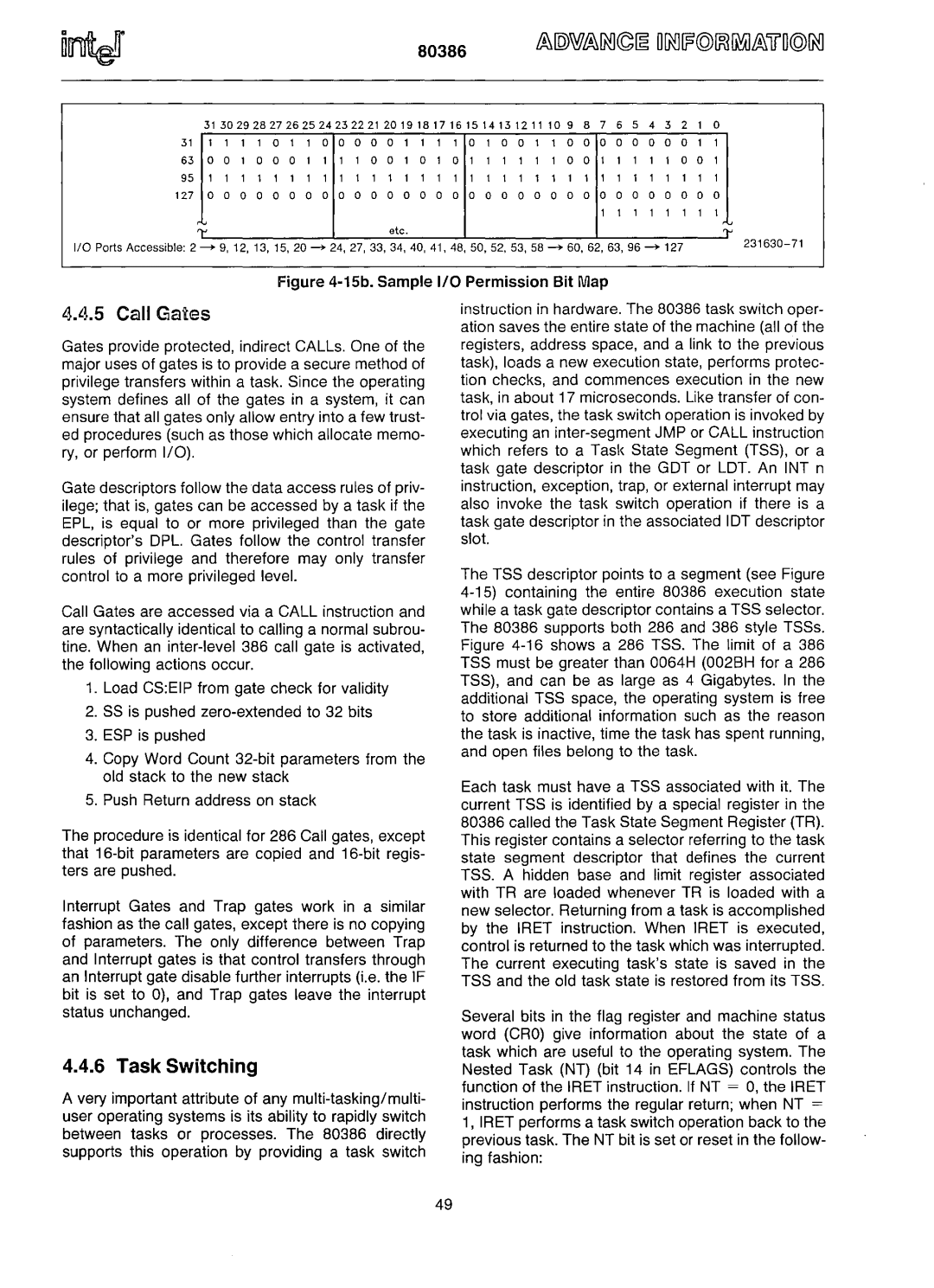
Figure 4-15b. Sample I/O Permission Bit Map
4.4.5Call Ga~es
Gates provide protected, indirect CALLs. One of the major uses of gates is to provide a secure method of privilege transfers within a task. Since the operating system defines all of the gates in a system, it can ensure that all gates only allow entry into a few trust- ed procedures (such as those which allocate memo- ry, or perform I/O).
Gate descriptors follow the data access rules of priv- ilege; that is, gates can be accessed by a task if the EPL, is equal to or more privileged than the gate descriptor'sOPL. Gates follow the control transfer rules of privilege and therefore may only transfer control to a more privileged level.
Call Gates are accessed via a CALL instruction and are syntactically identical to calling a normal subrou- tine. When an
1.Load CS:EIP from gate check for validity
2.SS is pushed
3.ESP is pushed
4.Copy Word Count
5.Push Return address on stack
The procedure is identical for 286 Call gates, except that
Interrupt Gates and Trap gates work in a similar fashion as the call gates, except there is no copying of parameters. The only difference between Trap and Interrupt gates is that control transfers through an Interrupt gate disable further interrupts (i.e. the IF bit is set to 0), and Trap gates leave the interrupt status unchanged.
4.4.6Task Switching
A very important attribute of any
instruction in hardware. The 80386 task switch oper- ation saves the entire state of the machine (all of the registers, address space, and a link to the previous task), loads a new execution state, performs protec- tion checks, and commences execution in the new task, in about 17 microseconds. Like transfer of con- trol via gates, the task switch operation is invoked by executing an
The TSS descriptor points to a segment (see Figure
Each task must have a TSS associated with it. The current TSS is identified by a special register in the 80386 called the Task State Segment Register (TR). This register contains a selector referring to the task state segment descriptor that defines the current TSS. A hidden base and limit register associated with TR are loaded whenever TR is loaded with a new selector. Returning from a task is accomplished by the IRET instruction. When IRET is executed, control is returned to the task which was interrupted. The current executing task'sstate is saved in the TSS and the old task state is restored from its TSS.
Several bits in the flag register and machine status word (CRO) give information about the state of a task which are useful to the operating system. The Nested Task (NT) (bit 14 in EFLAGS) controls the function of the IRET instruction. If NT = 0, the IRET instruction performs the regular return; when NT = 1, IRET performs a task switch operation back to the previous task. The NT bit is set or reset in the follow- ing fashion:
49